
Most manufacturers and fabricators I speak to are not short of enquiries. They are short of a reliable way to turn enquiries into quotes, and quotes into orders. A drawing lands in an inbox, someone means to chase it, and three weeks later the buyer has gone elsewhere without saying why.
I am Harry Ashton. Hashton is a Nottinghamshire web and product studio, and a lot of my work is the unglamorous plumbing between a website and the way a business actually runs. For a firm turning over around £5m to £10m, the easiest money is often in the enquiries you already get.
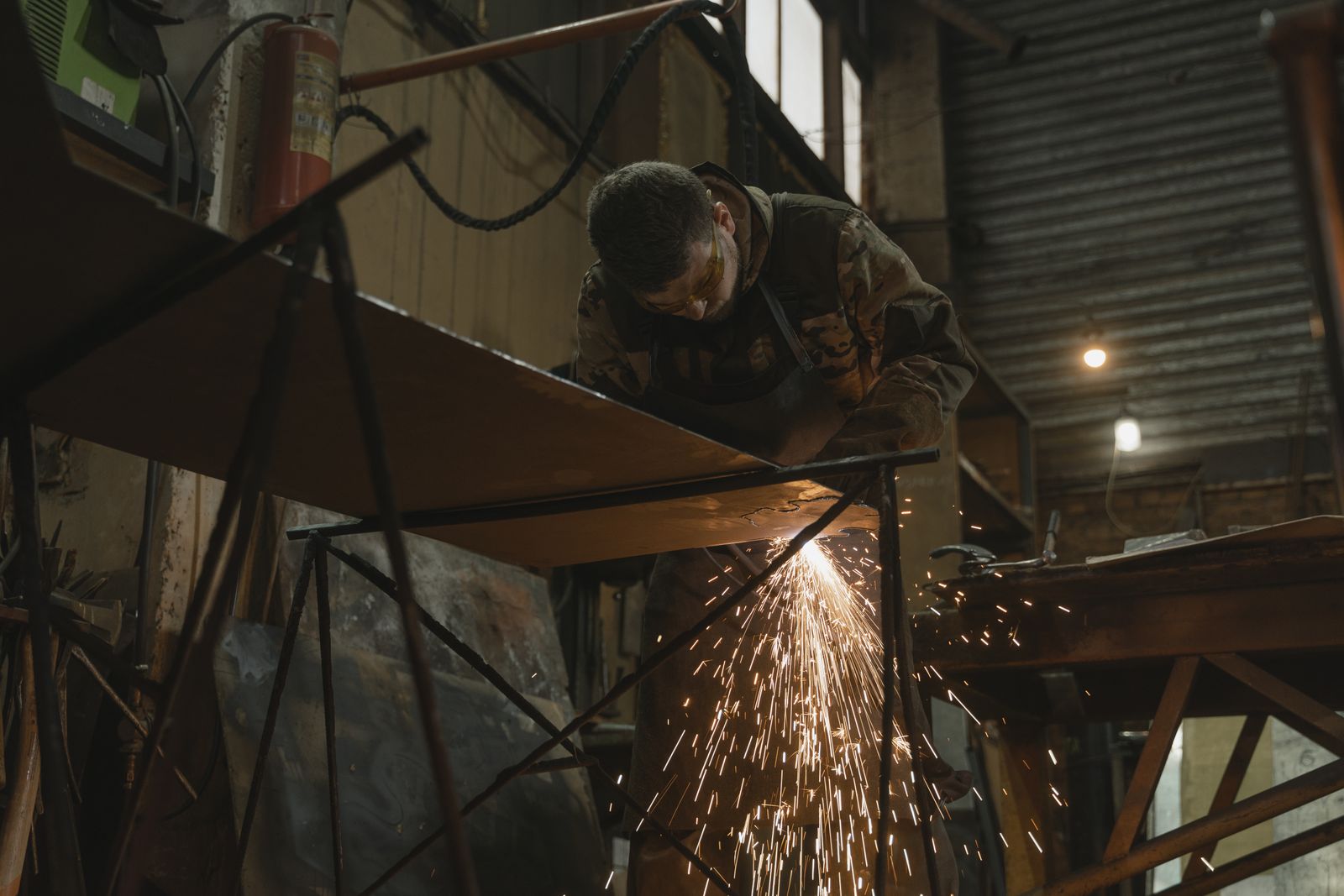
The shop floor is usually fine. The leaks tend to happen before the job ever reaches it. Photo: Tima Miroshnichenko / Pexels.
How quote requests go cold
In a lot of established firms, enquiries still arrive the way they did fifteen years ago: a phone call, an email with a PDF attached, sometimes a fax. Each one then depends on a person to read it, work out what is being asked, find the missing details, price it, send it, and remember to follow up.
Every step is a place a request can stall. The drawing has no material grade. The estimator is on holiday. The quote goes out and nobody chases it, because whoever sent it is now pricing ten others. Nobody is being lazy. That is just what happens when the process lives in inboxes and memory.
A “send us your drawing” form that asks the right questions
The single most useful change is usually an enquiry form built for how your buyers actually buy. Not a generic “name, email, message” box, but a form that asks for what your estimators need to price the job first time:
- the drawing or CAD file itself, with the common formats you accept listed clearly,
- material and grade, or “not sure yet” if they genuinely do not know,
- the spec, finish or welding code the job has to meet,
- quantity, and whether it is a one-off, a batch, or repeat work,
- approximate size or weight, so you can spot jobs outside your capacity early,
- the deadline, and whether it is firm or flexible.
Make the essentials required and the rest optional, so a buyer with half the details can still send something. It saves the first round of “can you just confirm” emails, and shows the buyer you know your trade.
Feed your ERP, do not replace it
Most firms at this size already run an ERP or MRP system, and plenty have years of jobs, customers and pricing history in it. The answer is rarely to rip that out. A well built enquiry form can create the enquiry or quote record in the system you already use, attach the drawing, and assign it to the right estimator, either through the system’s own import or API or through a simple integration in between.
The enquiry stops living in one person’s inbox. It gets a reference, an owner and a date the moment it arrives.
Follow up automatically, not from memory
Once a quote has gone out, the follow-up should not depend on someone remembering. Simple rules cover most of it:
- When a quote is sent, schedule a polite check-in a few days later if the buyer has not replied.
- If the quote has a validity date, send a reminder before it expires.
- If there is still no answer, ask one short question: did it go elsewhere, is it on hold, or is something missing?
- Record the answer, so you learn why jobs are lost, not just that they were.
These can go out in the estimator’s name and read like a person wrote them. Your team still makes the judgement calls. They just stop carrying a mental list of who to chase.
Progress updates instead of “call us for an update”
The same thinking applies after the order is placed. If the only way a customer can find out where their job is involves ringing your office, you are spending staff time answering the same question and making the customer work for basic information.
Short, automatic updates at the key stages, such as order confirmed, material in, in production, ready for dispatch, cost very little to set up once your system knows the stages. They also make you look organised next to competitors who still say “give us a call”.
Check the contact details you have published
This sounds too basic to mention, but I find problems often. Over the years your email and phone number end up in social posts, directory listings, trade body pages and old PDF brochures. If one has a typo in the email domain, every message sent to it bounces, and you never find out, because the bounce goes to the sender, not you.
Once a year, list every place your contact details appear. Email each address exactly as written, ring each number, and click every contact link on your directory profiles. Fix what is wrong at the source. It is a free afternoon’s work.
Make service pages specific enough to match real jobs
Buyers increasingly start with a search engine or an AI assistant, and they ask specific questions: a material, a process, a size, a standard, a location. Google’s AI Overviews and AI Mode, and tools like ChatGPT, can only point to you if your site says what you can do.
A page that says “we offer a wide range of fabrication services” gives them nothing to match. A page that says which materials you work with, the processes and finishes you offer, the size and weight limits of what you can handle, the standards your welders and quality system work to, and the industries you supply gives buyers and AI answers something concrete. Google’s own guide to generative AI features in Search says its AI features build on its normal Search ranking and quality systems, so clear, helpful pages are what count. I went through the follow-up questions a page should answer in this earlier post.
Then link each of those pages to the drawing upload form. Someone who has just read that you handle exactly their kind of job should be one click from sending it to you, which is the idea behind giving every customer task one official page.
Questions owners ask me
Our buyers like to phone. Will they actually use a form?
Some will keep phoning, and that is fine. The form is for the buyer who finds you at nine at night with a drawing ready to go. Keep the phone route and add the form alongside it.
Do we need to change our ERP system to do this?
Usually not. Most of the value comes from getting enquiries into the system you already have, in a consistent shape. The first step is checking how it accepts new records.
Will automatic follow-ups annoy customers?
Not if they are short, well timed and stop as soon as someone replies. A single polite check-in is something most buyers expect. What annoys people is being chased repeatedly about a job they already answered.
Where should we start?
Start with the cheapest fixes: test every published email address and phone number, and tighten your main service pages. Then build the drawing upload form. Automatic follow-ups and progress updates come next, once enquiries are flowing into one place.
None of this is about replacing the people who price and build your work. It is about making sure the enquiries they have earned do not quietly disappear on the way to them.
If you run a manufacturing or fabrication business in the East Midlands and want to know where your enquiries are leaking, I offer a free discovery call and AI search audit. I will look at how buyers find you, how they get in touch, and what happens next. Start at Hashton or email contact@hashton.agency.